
 2025-11-24
 Shenzhen Beta Co., Ltd
When everyone is discussing topics related to “new energy, energy saving, clean energy, solar energy, and so on”, some of the terms coming out of their mouths might leave you confused:
“What does this mean?” “What are these jargon and abbreviations?”
This article explains some words that seem ' very technical' in the simplest terms, giving you a clearer understanding of the energy storage industry, so even a beginner can immediately chat enthusiastically with those around them.
Energy Storage Terms: 20 Must-Know Keywords for Beginners
1.Energy Storage: The process of storing electricity and using it when needed.
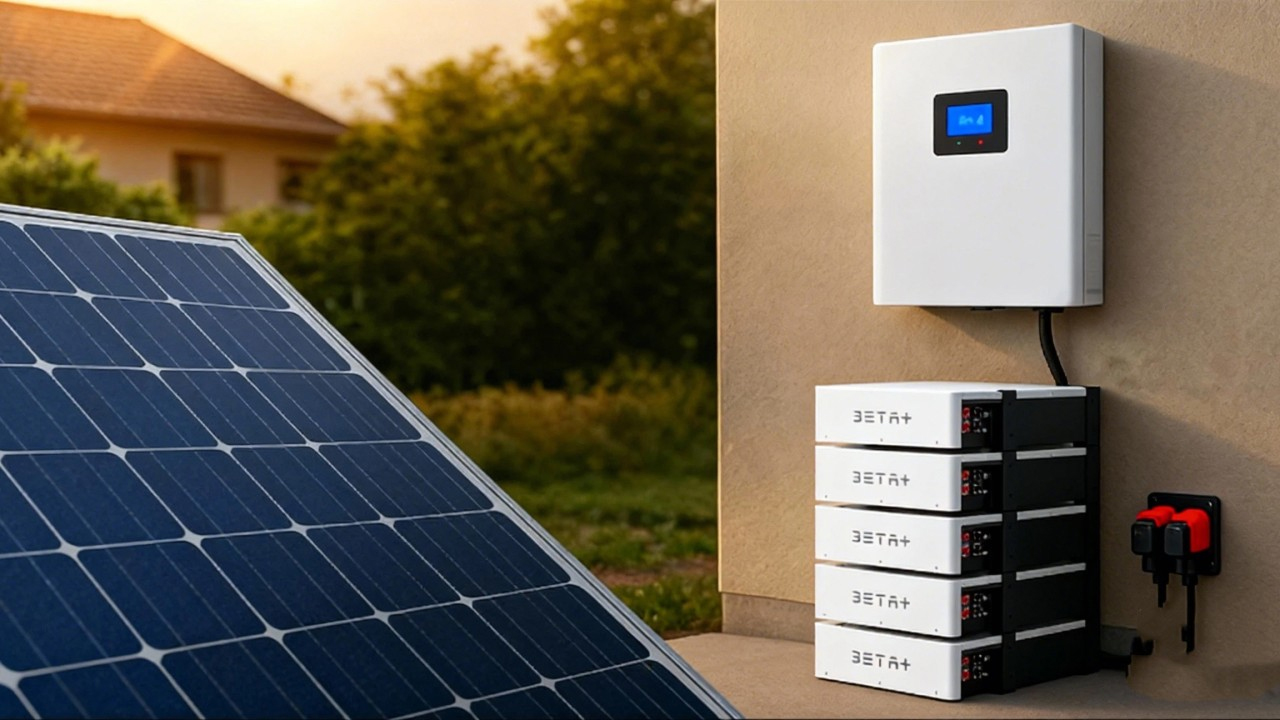
2.Energy Storage System (ESS): A complete set of equipment including batteries, inverters, controllers, etc.
3.Battery Capacity: How much electricity it can store, measured in Wh or kWh, e.g., ‘5000Wh’= battery can power 1000W for 5 hours
4.Lithium Iron Phosphate Battery (LiFePO4): Preferred for home energy storage; long lifespan, stable, and highly safe.
5.Ternary Lithium Battery (NMC/NCA): High energy density but relatively less safe than lithium iron phosphate; commonly used in electric vehicles.
6.State of Charge (SOC): The current remaining battery level (like your phone's battery percentage).
7.Depth of Discharge (DOD): Indicates how much of the battery is used each time; deeper discharge shortens lifespan.
8.Battery Management System (BMS): Manages battery charging/discharging, temperature, and voltage to ensure safe operation.
9.Cycle Life: The lifespan of a battery, indicating how many charge and discharge cycles it can undergo.
10.Round-trip Efficiency: The ratio of the energy retrieved from the battery compared to the energy put in, generally around 85%~95%.
11.Charging Time: The time required to fully charge, depending on power and capacity.
12.Battery Series/Parallel: Series: increases voltage; Parallel: increases capacity.
13.High-Frequency Inverter / Utility-Frequency Inverter: Two different inverter architectures; the former is lightweight, the latter is more stable.
14.Voltage Range: The range of input/output voltage supported by the system, must match the device.
15.UPS Function (Backup Power): Automatically supplies power during a power outage to ensure devices like refrigerators/routers remain powered.
16.Peak Power: The maximum short-term output capacity to handle high-power startup devices.
17.Switching Time: The time it takes to switch to battery power after a power outage; the shorter, the better.
18.Energy Storage System Capacity Configuration: Usually recommended: PV power ≈ half to the same as battery capacity.
19.Smart Storage: Energy storage devices that can be remotely controlled or intelligently scheduled, supporting apps and IoT integration.
20.Safety Protection Level (IP Rating): IP20/IP65, etc., reflecting the dust and water resistance of the equipment. bigger number better waterproof nivel
These data not only allow you to join the discussion on topics but also serve as technical data and quality references when choosing products and suppliers.
BETA+ is committed to simplifying knowledge, making it easy for every customer to fully understand whether the goods they buy are truly worth the investment. As our slogan goes, BETA+ = Bring Energy To All, we also spread the power of knowledge everywhere.
Follow us for more information on energy storage, visit www.a-beta.net.
