
 2025-12-24
 Shenzhen Beta Co., Ltd
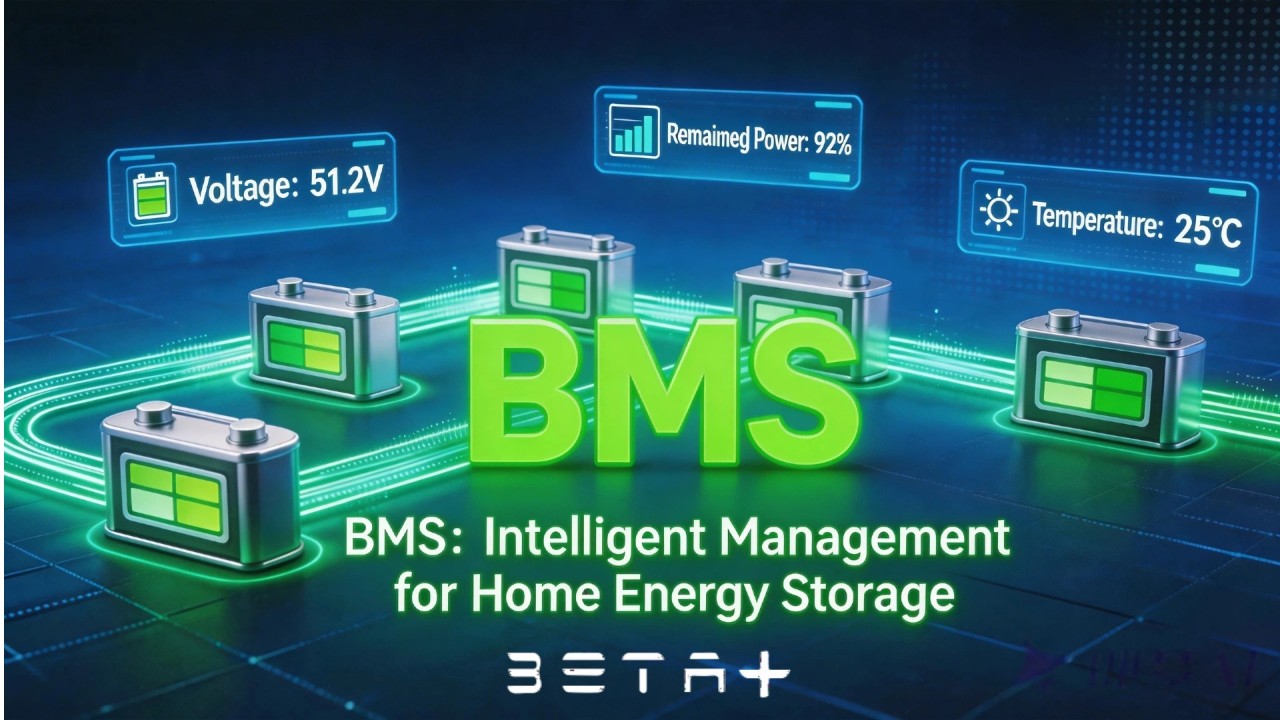
Residential energy storage systems act like a "dedicated reservoir" for household energy supply. Their safety, stable operation and lifespan largely depend on the cell balancing technology of the Battery Management System (BMS).
This detail, often overlooked by ordinary users, is a key industry benchmark for the quality of home storage products—it not only directly determines the consistency of cells within the battery pack and the long-term reliability of the system, but also distinguishes high-end, mid-range and entry-level products.
Compared with basic passive balancing technology in entry-level products, active balancing technology, with its advantages of efficient energy transfer, low loss, and dynamic adjustability, has become a core standard for medium-to-high-end home storage devices.
Cell consistency differences are an inherent challenge in home storage systems. In current domestic scenarios, lithium iron phosphate cells account for over 95% of usage. Even cells of the same batch and specification can have slight initial voltage deviations due to minor differences in electrode material precision, electrolyte formulation, and slurry coating uniformity during production. In daily household use, factors such as balcony exposure to sunlight, low winter temperatures, varying charge-discharge frequencies on weekdays and holidays, and unstable grid charging voltages further amplify these deviations. Over time, high-voltage cells may become overcharged, while low-voltage cells are prone to over-discharge, significantly shortening battery cycle life and, in severe cases, leading to cell swelling, leakage, or even thermal runaway.
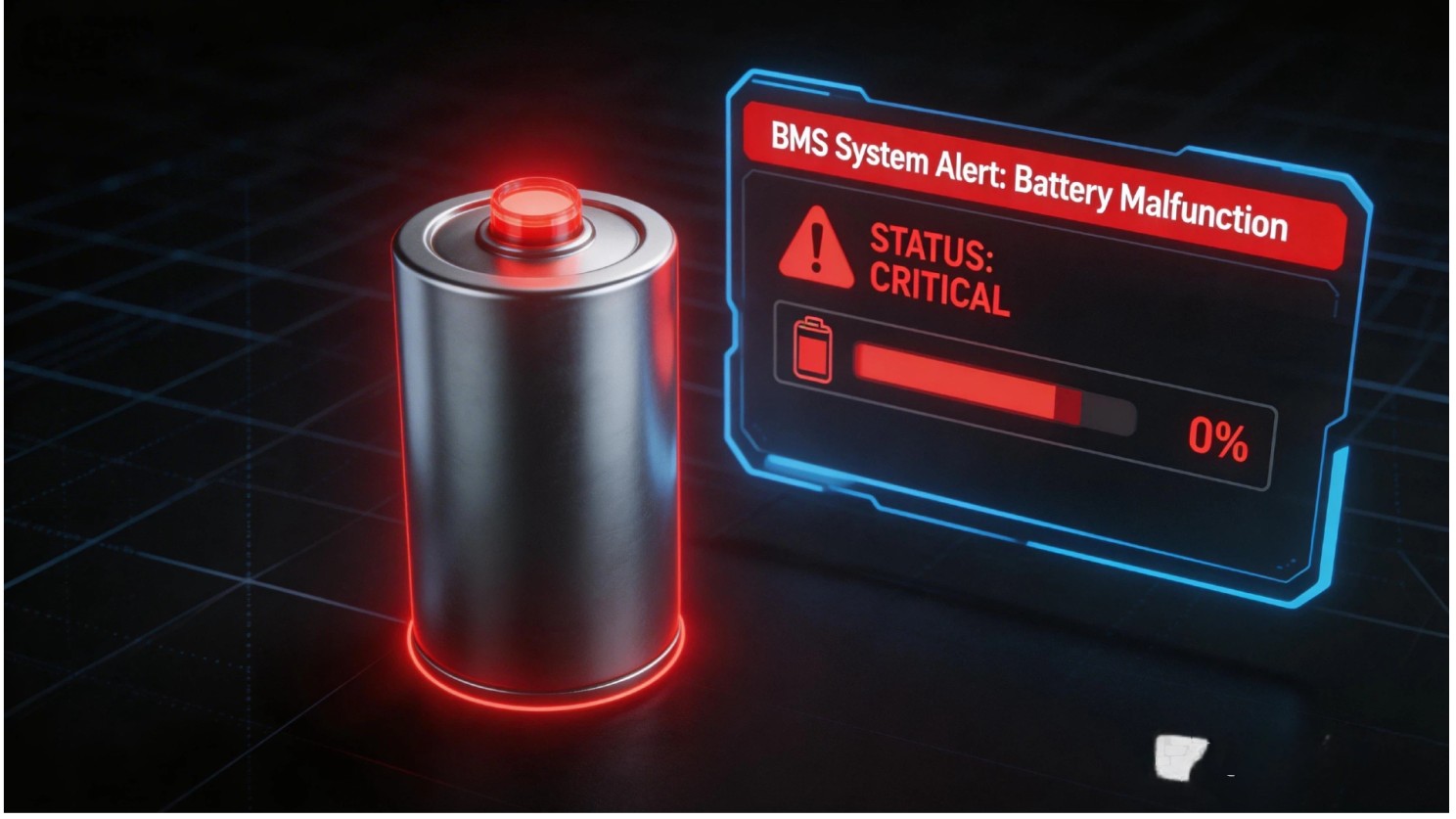
Active balancing technology completely overcomes the limitations of passive balancing. Its core principle is to use built-in DC-DC conversion modules or inductive energy transfer circuits to create an energy flow channel between cells, precisely transferring excess energy from high-voltage cells to low-voltage cells, thereby addressing cell consistency differences at the source.Its operating logic is simple and reliable: the BMS, through a high-precision sampling module (accuracy ±1mV, superior to passive balancing), captures each cell's voltage, temperature, and SOC in real time. After analysis by the MCU main control chip, balancing commands are triggered to dynamically adjust energy distribution, ensuring that each cell operates within the optimal range and preventing a single cell's damage from affecting the entire pack.
In actual home storage usage, a BMS with active balancing technology can maintain cell voltage deviations within 3mV, keeping the entire battery pack in an optimal collaborative state and fully utilising each cell's capacity potential.According to industry authoritative organisations' actual measurements, this technology can increase the cycle life of household energy storage cells by more than 20%, extending the service life of household energy storage systems from 8-10 years to 12-15 years, while also reducing after-sales maintenance due to cell damage, indirectly lowering users' long-term usage costs.
BETA+ self-developed BMS offers even more.
In addition to providing active balancing among cells, it can actively balance new battery pack added or removed during use, making it more convenient for end-users to adjust battery capacity without complex operations, ensuring that your home storage battery requirements are more closely matched and precise.
is there any more problem or functions that you meet / need from the BMS ? DM us and discuss more.
